
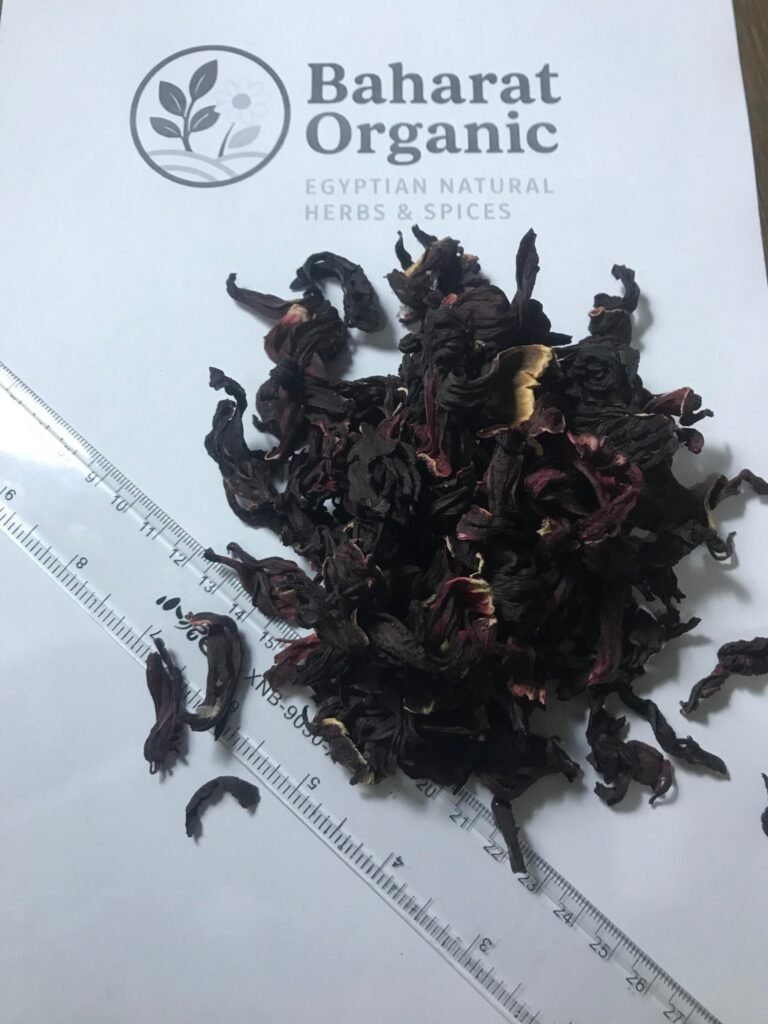
If you are sourcing Egyptian hibiscus wholesale for herbal tea, beverages or natural colour, you are buying from one of the best-known origins in the world for dried hibiscus calyces. Egyptian hibiscus, known locally as karkade, is valued for its deep red colour, pleasant tartness and clean flavour.
This guide explains the grades importers usually buy, the specifications worth agreeing on, and how to get an accurate bulk quotation.
What is Egyptian hibiscus?
Hibiscus tea is made from the dried calyces of Hibiscus sabdariffa, the fleshy red part that surrounds the flower’s seed pod. After harvest, the calyces are separated, dried, cleaned and graded. The warm, dry climate in Egypt supports natural drying that helps preserve colour and acidity, the two qualities buyers care about most.
Egyptian hibiscus wholesale grades
Different industries need different forms. These are the grades most importers request:
- Whole hibiscus flowers (calyces). Used for loose-leaf herbal tea, retail packs and premium infusions where appearance matters.
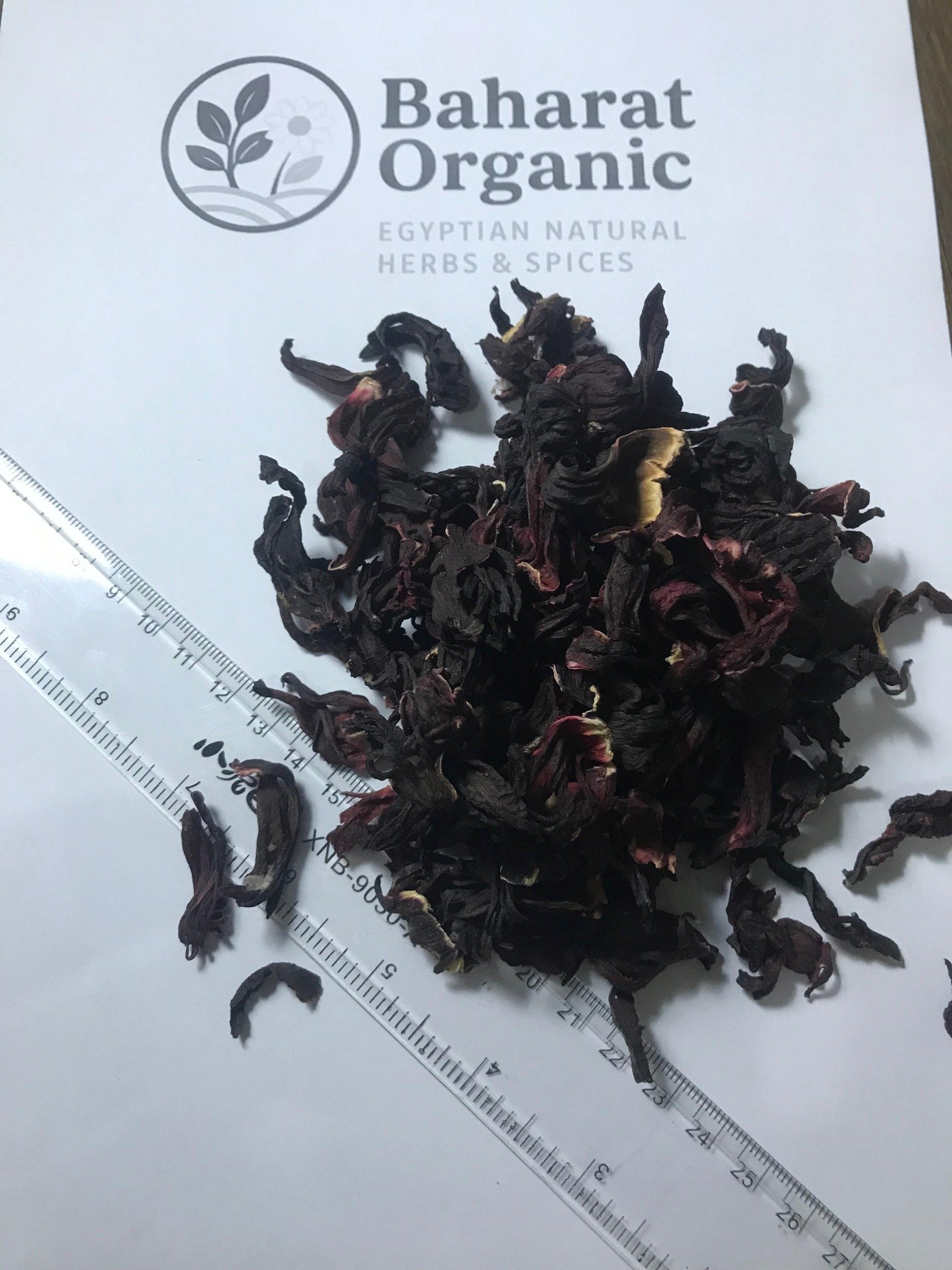
- Cut / sliced hibiscus. Calyces cut into pieces, popular for tea blends where hibiscus is mixed with other herbs and fruits.
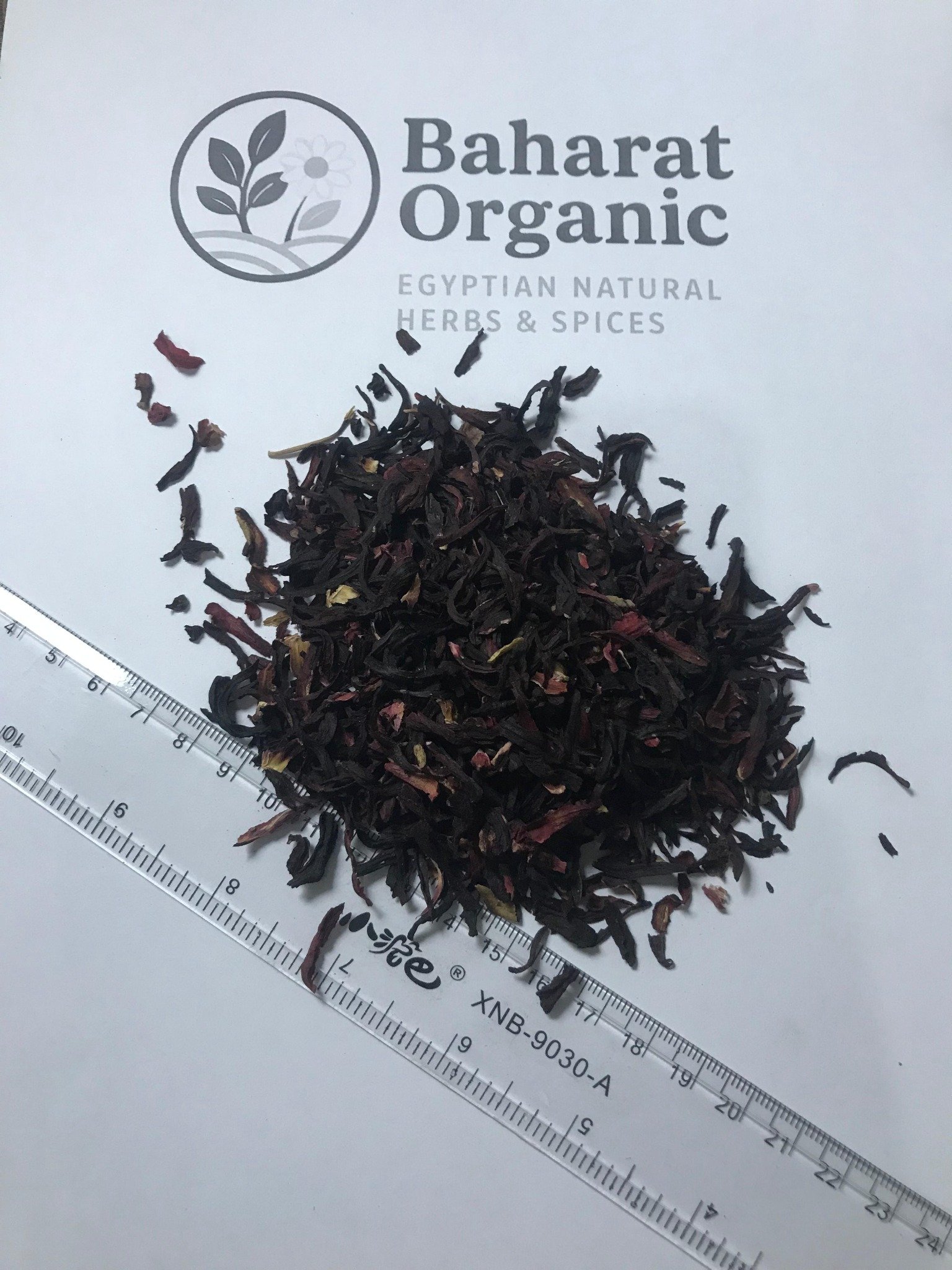
- TBC (tea bag cut). Fine, uniform cut sized for tea bag filling machines. Tea packers usually specify an exact particle size range.
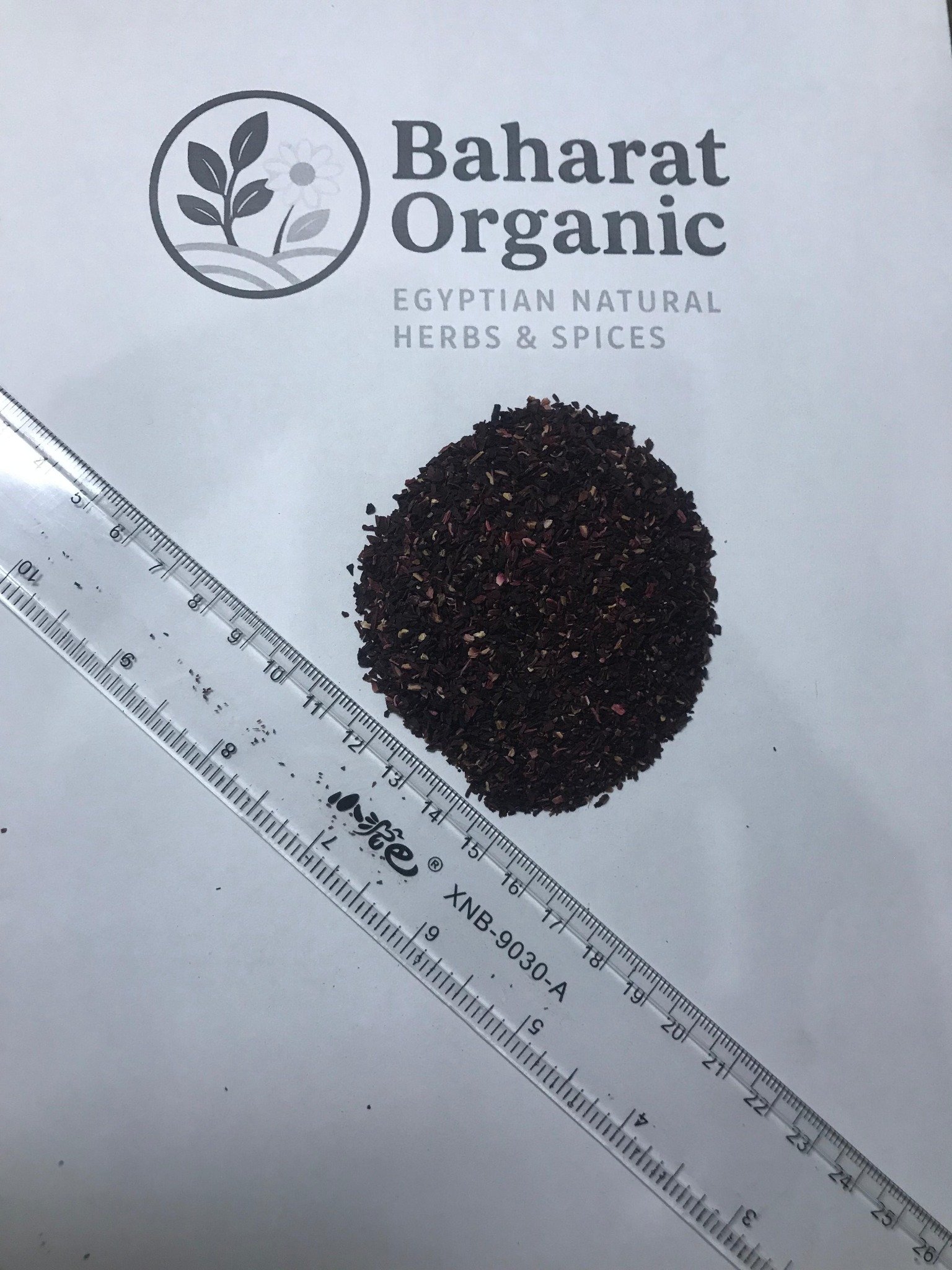
- Siftings and powder. Used by beverage, food and colour manufacturers for extraction, drink mixes and natural red colouring.
Key specifications to agree on
Before confirming an order, put these points in writing so every lot matches your expectations:
- Form and particle size — whole, cut, TBC or powder, plus mesh or millimetre range.
- Colour — deep red is preferred for most tea and beverage uses.
- Moisture — a maximum moisture level protects against mould during transit and storage.
- Foreign matter and admixture — limits on stems, seeds, dust and other plant material.
- Ash and acid-insoluble ash — common limits requested by food and tea markets.
- Microbiology — if your market requires low counts, ask whether steam or gamma sterilisation is available.
- Pesticide residues and heavy metals — tested against your destination market’s limits.
Always approve a pre-shipment sample from the actual lot and request a recent certificate of analysis.
Main uses of bulk hibiscus
- Herbal tea and infusions — on its own or as the base of fruit and berry blends.
- Cold beverages — iced teas, juices and ready-to-drink products.
- Natural colour — a plant-based red for food and drink applications.
- Food products — syrups, jams, confectionery and seasoning blends.
- Cosmetics — extracts used in natural skin and hair care.
Packing and shipping
Hibiscus is usually packed in PP bags, paper bags or kraft bags with an inner liner, with the net weight per bag agreed in advance. Bags can be palletised and labelled to your market’s requirements. Export documents such as the certificate of origin, phytosanitary certificate, packing list and commercial invoice are prepared to match the contract, and we can work on FOB, CFR/CNF or CIF terms.
Why source hibiscus from Baharat Organic Company
We focus on export and bulk supply only. We prepare each quotation around your grade, quantity and destination port, and share samples and analysis before you commit. Alongside hibiscus, we supply chamomile, calendula, mint, peppermint, lemongrass and other botanicals, so you can source more of your tea blend from one partner.
New to sourcing from Egypt? Read our practical guide for wholesale buyers of Egyptian herbs, spices and seeds.
Frequently asked questions
What is the minimum order for Egyptian hibiscus wholesale?
We work with wholesale and bulk quantities only. Share your volume and we will confirm what we can offer.
Can you supply a specific TBC size?
Yes. Send us your particle size range or specification sheet.
Can I get a sample first?
Yes. We send samples so you can check colour, cut and aroma before ordering.
Request a hibiscus quotation
Tell us the grade, quantity and destination port, and we will send you a quotation.
Email: export@baharatorganic.com
WhatsApp: +20 10 5559 4196